Skip to content

Most homeowners assume an old fieldstone basement is too damp, too unstable, or too outdated to ever become a real living space. In South Shore, MA, that assumption leaves thousands of square feet wasted beneath some of the region’s most valuable homes. The simple myth that finishing a fieldstone basement is too complicated or difficult is one that has endured for too long.
The truth is: turning a fieldstone basement into a comfortable living space is absolutely possible — but only if it’s done with the right waterproofing, insulation, and structural approach from the beginning. Done incorrectly, these projects trap moisture behind walls, accelerate foundation damage, and create mold problems that can cost tens of thousands to undo. Done correctly, they become warm, dry, code-compliant living spaces that add meaningful value and function to historic New England homes.
But the process is more complex than finishing a modern poured-concrete basement, and the mistakes made with this kind of project are expensive to fix. The South Shore has one of the highest concentrations of pre-1920 homes in New England, so our team regularly handles fieldstone basement finishing in Quincy, Hingham, Weymouth, Braintree, Plymouth, and across the local area.
This guide covers what you need to know: how to assess whether your basement is ready, how to waterproof it correctly, and what the finished space can realistically become.
Key Takeaways
- Finishing a fieldstone basement is absolutely possible — but it requires a specialized waterproofing and insulation approach.
- Closed-cell spray foam is the preferred insulation method for irregular fieldstone walls because it seals gaps and reduces condensation risk.
- Moisture management and structural assessment must happen before framing or finishing begins.
- Older South Shore homes often need repointing, drainage upgrades, or ceiling-height planning before renovation starts.
- Common DIY mistakes — like using rigid foam boards or Portland cement mortar — can trap moisture and accelerate damage.
- A properly finished fieldstone basement can become warm, dry, code-compliant living space that adds long-term home value.
What Makes a Fieldstone Basement Different — and Why It Matters

A fieldstone basement is a foundation built from irregular natural stones gathered locally and bonded with lime-based mortar — a common construction method in New England homes built before the 1920s. These basements are known for their historic character, but their porous stone walls and uneven surfaces require specialized waterproofing, insulation, and finishing methods. These basements are common throughout South Shore towns, particularly in older neighborhoods of Quincy, Hingham, Scituate, Marshfield, and Plymouth, where historic homes are common.
In many homes in this area built before World War I, we commonly find multiple generations of repairs layered onto the original fieldstone foundation: cement patches over lime mortar, abandoned moisture barriers, improperly framed walls installed directly against stone, and hidden mold behind finished paneling added decades ago. Older coastal homes also tend to experience higher seasonal moisture movement due to elevated groundwater and salt-air exposure- a common issue with this kind of basement.
What makes these basement finishing projects different from finishing a flat concrete basement is physics. Fieldstone basement walls are porous: the thousands of mortar joints between individual stones allow moisture to migrate inward, especially in the South Shore’s coastal, high-water-table conditions. The irregular surface of the stones creates challenges for insulation and framing that simply don’t exist with smooth concrete walls.
One common misconception is worth correcting before you invest in planning: fieldstone foundations do not need to breathe. The idea that leaving an air gap between the stone wall and any framing allows moisture to evaporate safely is building folklore — and acting on it leads directly to mold. Masonry tolerates high moisture content without damage. The danger arises when warm interior air contacts a cold stone surface, condensing within the framing cavity. The correct approach — which we cover in Step 2 — eliminates this risk entirely.
Step 1 — Assess Your Fieldstone Foundation Before Building Anything
Not every fieldstone basement is ready to finish today. Before any framing, insulation, or finishing work begins, the foundation needs a structural assessment. These are the warning signs that fieldstone basement repair work is needed first:
- Mortar crumbling or falling out between the stones — sometimes called sand in the cove
- White powdery deposits on the stone surface (efflorescence — a sign of chronic water infiltration)
- Stones that shift or move under slight pressure
- Walls that bow or lean inward toward the basement
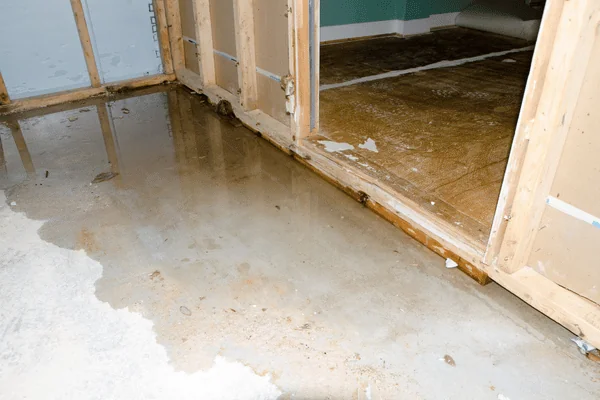
- Water seeps visibly through the wall during or after rain
- A persistent musty odor or visible mold on the stone surface
If you find any of these conditions, fieldstone foundation repair — specifically repointing, which means removing deteriorated mortar and replacing it with compatible lime-based mortar — needs to come before any finishing work begins.
One critical note: patching old lime mortar foundations with modern Portland cement accelerates damage rather than preventing it. Portland cement is too rigid for lime-based foundations; it traps moisture inside the wall and causes the surrounding stones to crack. A professional assessment determines what repairs your specific foundation needs.
Massachusetts building code also sets a minimum finished ceiling height of 6 feet 8 inches for habitable basement space. Before committing to a finishing project, confirm your fieldstone basement meets this clearance, accounting for the additional inches that any ceiling system will consume.
So the simple answer to the question ‘can you finish a fieldstone basement’ is yes, but it takes expert skills and attention to detail to make it work.

Step 2 — Fieldstone Basement Waterproofing and Insulation
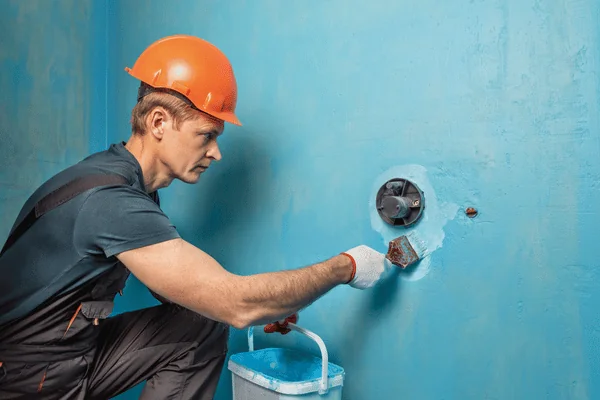
Waterproofing a fieldstone basement is not the same as waterproofing a modern poured-concrete basement. Standard masonry sealers and Drylok-style paints are not appropriate for fieldstone walls — they restrict the wall’s natural behavior and accelerate mortar deterioration. There are two legitimate approaches for fieldstone basement waterproofing, and the right one depends on your specific conditions:
Interior Moisture Management (Most Common for South Shore Homes)
A perimeter drainage channel is installed along the interior base of the foundation walls, directing any water that passes through the stone toward a sump pump for removal. This approach does not stop water from entering the wall — it manages water before it causes damage to your finished space. For South Shore homes near the coast or in high-water-table areas like Scituate, Marshfield, and Hull, this is the standard first line of defense.
Exterior Waterproofing (For Active Infiltration)
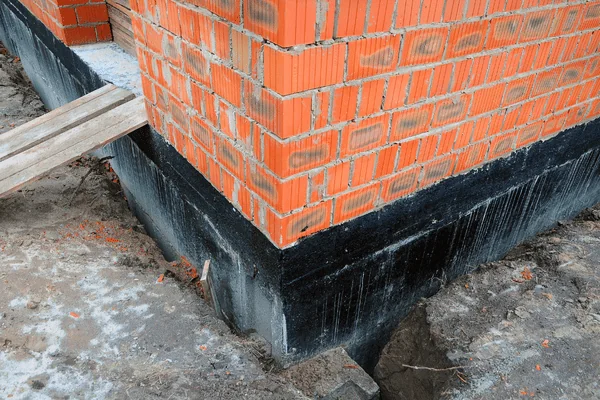
Involves excavating around the foundation perimeter, cleaning and repointing the exterior stone, and applying a waterproofing membrane to the exterior face. More disruptive and expensive, but it addresses the problem at its source. Typically reserved for situations with significant active water infiltration that interior drainage alone cannot manage.
Specialized Insulation Considerations
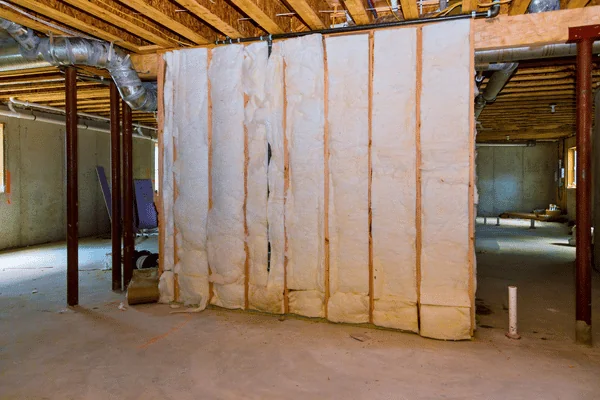
After waterproofing, insulation is the next critical step — and for fieldstone basements specifically, closed-cell spray foam is the correct choice. While other insulation options may seem appropriate or cheaper, they are not as effective at protecting basements from moisture and temperature fluctuations. Rigid foam boards leave air pockets against the irregular stone surface, creating condensation zones and mold risk over time.
Closed-cell spray foam, on the other hand, adheres directly to the uneven stone, sealing every gap and joint in a single application while providing both an air barrier and thermal insulation. Massachusetts code requires a minimum of R-15 insulation value for basement walls; 2 to 3 inches of closed-cell spray foam meets this requirement while handling the unique geometry of fieldstone basement walls that no other insulation type can.


Step 3 — Fieldstone Basement Finishing – What Your Space Can Become
With waterproofing resolved and closed-cell spray foam applied to the stone walls, the fieldstone basement finishing process follows a familiar sequence as other basement finishing projects. All aspects of a fieldstone basement renovations are specifically tailored to the unique characteristics of an older South Shore home.
Framing
Steel stud framing is the preferred choice over wood in fieldstone basement environments. Steel does not absorb moisture, does not warp seasonally, and does not provide a surface for mold. Studs are positioned 2 to 4 inches from the spray-foam-covered stone wall, then covered with moisture-resistant drywall. The result is a clean, flat finished wall surface — the foundation for everything that comes next.
Ceiling
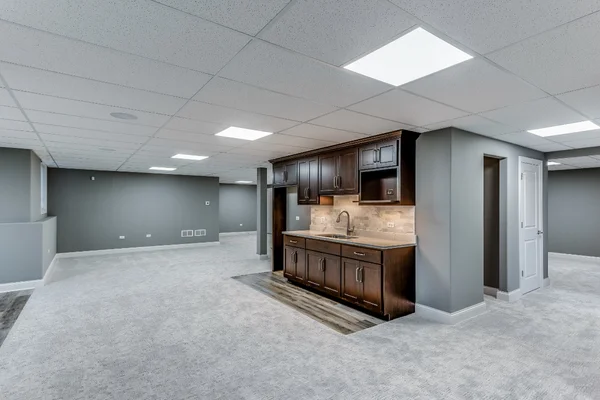
Ceiling height is often the most limiting factor in South Shore’s older homes. If your clearance is tight, a painted exposed ceiling — typically matte black or bright white — is the most effective solution: it adds no height while looking intentional and finished. Drop ceiling tiles with a suspended grid are the right choice when utility access to plumbing and HVAC systems is required. Drywall creates the most seamless, home-like finish when clearance allows.
The right ceiling choice can dramatically change how a finished fieldstone basement feels — especially in older South Shore homes where every inch of height matters. From painted exposed ceilings to suspended tiles and finished drywall systems, each option has tradeoffs in appearance, access, and clearance. Explore all basement ceiling options available today.
What South Shore Homeowners Can Build – Fieldstone Basement Ideas
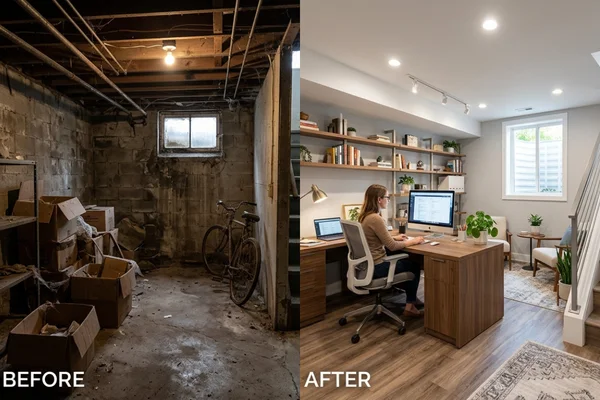
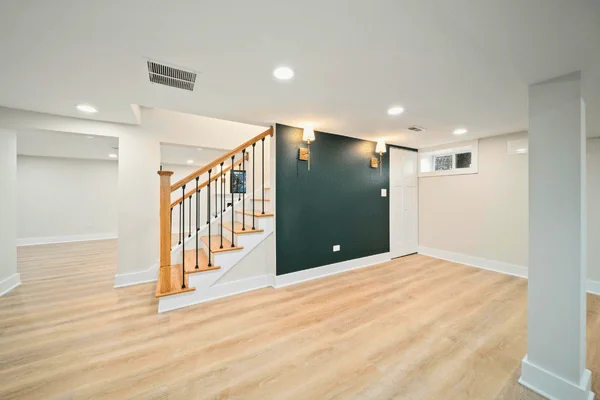
The character of a fieldstone basement — hand-laid stone gathered from the New England landscape more than a century ago — does not need to disappear during renovation. Some of the most successful finished basements in older South Shore homes preserve portions of the original stone as an architectural feature, blending historic texture with modern lighting, flooring, and clean finished walls. When properly waterproofed and insulated, these spaces can become some of the most comfortable and functional rooms in the home year-round.
Common fieldstone basement ideas we see in local Massachusetts homes include:
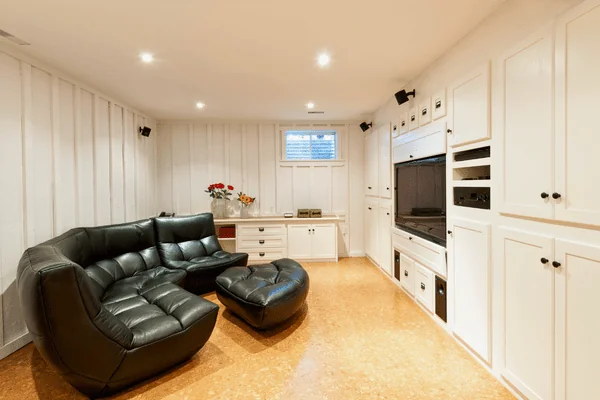
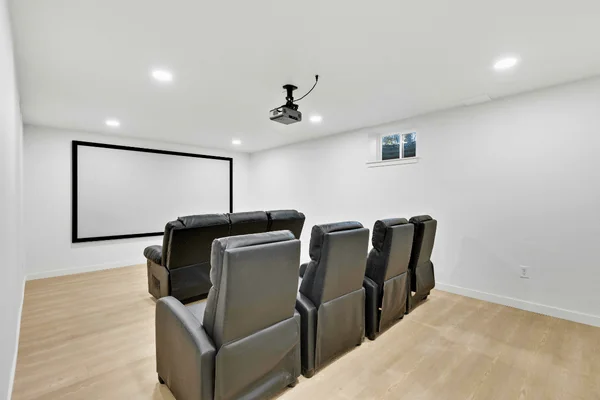
- Comfortable family rooms and media spaces designed for everyday living and entertaining
- Quiet home offices with insulated walls and improved lighting for remote or hybrid work
- Guest suites with egress windows, added bathrooms, and privacy for extended family or visitors
- Durable kids’ playrooms with moisture-resistant flooring built for heavy daily use
- Home gyms with resilient flooring, reinforced lighting, and sound-dampened ceilings
- Hobby rooms/studios that take advantage of the space’s separation from the main living space
- Multi-purpose flex rooms that can adapt over time as family needs change
Some homeowners also choose to leave a small exposed section of the original fieldstone visible as a design element — preserving the home’s craftsmanship and history while still creating a clean, modern finished space.
The cost of finishing a fieldstone basement in South Shore, MA typically ranges from $40,000 to $90,000+, depending on basement size, foundation condition, waterproofing requirements, ceiling height constraints, and overall finish level. Older homes requiring extensive repointing, drainage work, or structural repairs can exceed this range, and it is important to note that for large, work-intensive projects, costs may reach the $125,000 range.
Waterproofing and closed-cell spray foam insulation alone — before framing, flooring, or finish work begins — typically costs between $8,000 and $20,000 in the local market, depending on the severity of moisture conditions and the size of the basement. Every project begins with a detailed assessment so homeowners understand the full scope before construction starts.
Historic fieldstone basement renovations often require specialized waterproofing, repointing, and insulation methods, which can increase costs beyond those of a standard basement remodel. To get started on your basement finishing project and see what price range your dream basement falls into, contact us today and get a free basement renovation cost estimate.
Why South Shore Homeowners Contact Us

Finishing a fieldstone basement requires a different approach than finishing a modern concrete basement. South Shore homeowners contact us because we understand how older New England foundations behave — from moisture movement and lime mortar deterioration to insulation challenges and ceiling-height limitations.
Our process focuses on solving moisture and structural concerns before finishing begins, helping homeowners avoid the mold, condensation, and framing failures common in improperly renovated basements. We also guide clients through local permit requirements, realistic budgeting, and design decisions specific to historic homes, providing clear scopes of work and honest recommendations from the start.
Before investing in drywall, flooring, or framing, make sure your fieldstone basement is truly ready to be finished. South Shore Basement Finishing provides detailed, no-obligation assessments that identify moisture risks, structural concerns, insulation needs, and permit requirements upfront — helping homeowners avoid expensive mistakes and build a durable, comfortable living space with confidence.
Frequently Asked Questions
Can a fieldstone basement be finished?
Yes. A fieldstone basement can be finished into a comfortable, code-compliant living space when the foundation is structurally sound, moisture is properly managed, and closed-cell spray foam is used on the irregular stone walls. The project is more complex and typically more expensive than finishing a modern poured-concrete basement, but the result is a fully functional, livable space.
How much does it cost to finish a fieldstone basement?
Finishing a fieldstone basement in South Shore, MA, typically costs $45,000 to $90,000 or more, depending on square footage, the extent of required waterproofing, the insulation approach, and the finish level. The waterproofing and spray foam insulation — before walls, flooring, or ceilings are installed — typically costs $8,000 to $20,000 on the South Shore. A free assessment from a qualified basement finishing contractor provides an accurate estimate for your specific conditions.
What not to do when finishing a basement?
The most common and costly mistakes when finishing a fieldstone basement are: starting framing before waterproofing is resolved, using rigid foam insulation on irregular stone walls (air gaps behind the foam create mold risk), patching old lime mortar with Portland cement (it causes faster deterioration), placing standard vapor barrier plastic against stone walls, and finishing without pulling the required building permits. Each of these errors leads to moisture damage, mold, or structural problems that are expensive to repair and fix later.
Is it illegal to finish a basement without a permit?
In Massachusetts, finishing a basement requires a building permit. Skipping the permit is illegal and can void your homeowner’s insurance coverage for that space, create serious complications when you sell your home, and result in required demolition of non-compliant work. South Shore towns including Quincy, Hingham, Weymouth, and Plymouth, all require permits for this scope of work. A licensed basement finishing contractor will handle all of the permit applications as part of the project.
| Ready to find out what’s possible in your South Shore, MA fieldstone basement?South Shore Basement Finishing provides free, no-obligation assessments across Quincy, Hingham, Weymouth, Braintree, Scituate, Marshfield, Plymouth, and all surrounding South Shore towns. We assess foundation condition, moisture history, ceiling clearance, and permit requirements before recommending a scope — so you know exactly what’s involved before committing. Take the guesswork out of the equation and contact us today for a free quote on your fieldstone basement finishing project! |